
August Edition: Peak Climbing Season, Lake Fireworks & the Fire Festival
Planning your trip? See our Mt. Fuji Private Day Tour page for current pricing and options.
Why Visit Mt. Fuji in August?
August is Mt. Fuji at its most alive. It is the peak of the climbing season, the lakes host summer fireworks, and the month closes with the spectacular Yoshida Fire Festival — one of Japan’s three most unusual festivals. The mountain is at its busiest and most festive, and the Fuji Five Lakes region offers cool lakeside air when Tokyo is at its hottest.
Can you see Mt. Fuji in August? It is the haziest month of the year, so plan smart: the summit appears most reliably in the early morning, often before 9–10 AM. By afternoon, clouds typically build around the peak. An early private departure from Tokyo is the single best thing you can do for your chances.
What August Offers at Mt. Fuji
- Peak climbing season — all four trails are open and the 5th Station has a true base-camp energy, with climbers from all over the world setting off day and night.
- Yoshida Fire Festival (August 26–27) — Fujiyoshida’s streets fill with massive burning torches to mark the end of the climbing season. Unforgettable if your dates align.
- Lake fireworks — Lake Kawaguchi and neighboring lakes hold summer fireworks displays in early August.
- Cool escapes — the 5th Station (2,305m) is 15°C cooler than Tokyo; the lakes and forests around Oshino Hakkai offer shade and spring-fed cool air.
- Summer greenery at its deepest — forests, lakes, and the red-brown summit cone make August’s distinctive look.
Sample Itinerary – 10-Hour Private Tour from Tokyo (August Edition)
7:00 AM – Hotel Pick-Up in Tokyo
The earliest start of any season — because in August, morning is everything. Beat both the haze and the holiday traffic with a direct, air-conditioned ride from your hotel.
9:00 AM – Arakurayama Sengen Park (Chureito Pagoda)
Arrive while the summit is still clear and photograph Japan’s most famous view: the five-story pagoda with Mt. Fuji behind it. The 400 steps are far more pleasant in the morning cool.
10:30 AM – Mt. Fuji 5th Station (Subaru Line)
Feel the buzz of peak climbing season at 2,305m. Watch climbers set off, visit Komitake Shrine, and enjoy genuine mountain coolness while Tokyo swelters below.
12:30 PM – Lunch: Hoto Noodles or Lakeside Café
Warm hoto is the classic, but in August many guests prefer a cool lakeside café in Kawaguchiko. Your driver will match the stop to your mood.
2:00 PM – Oshino Hakkai Springs
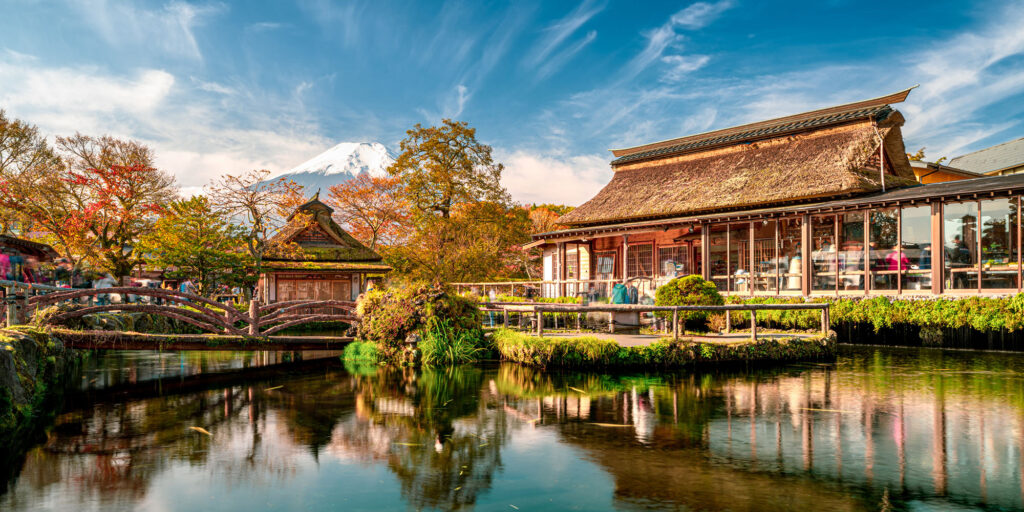
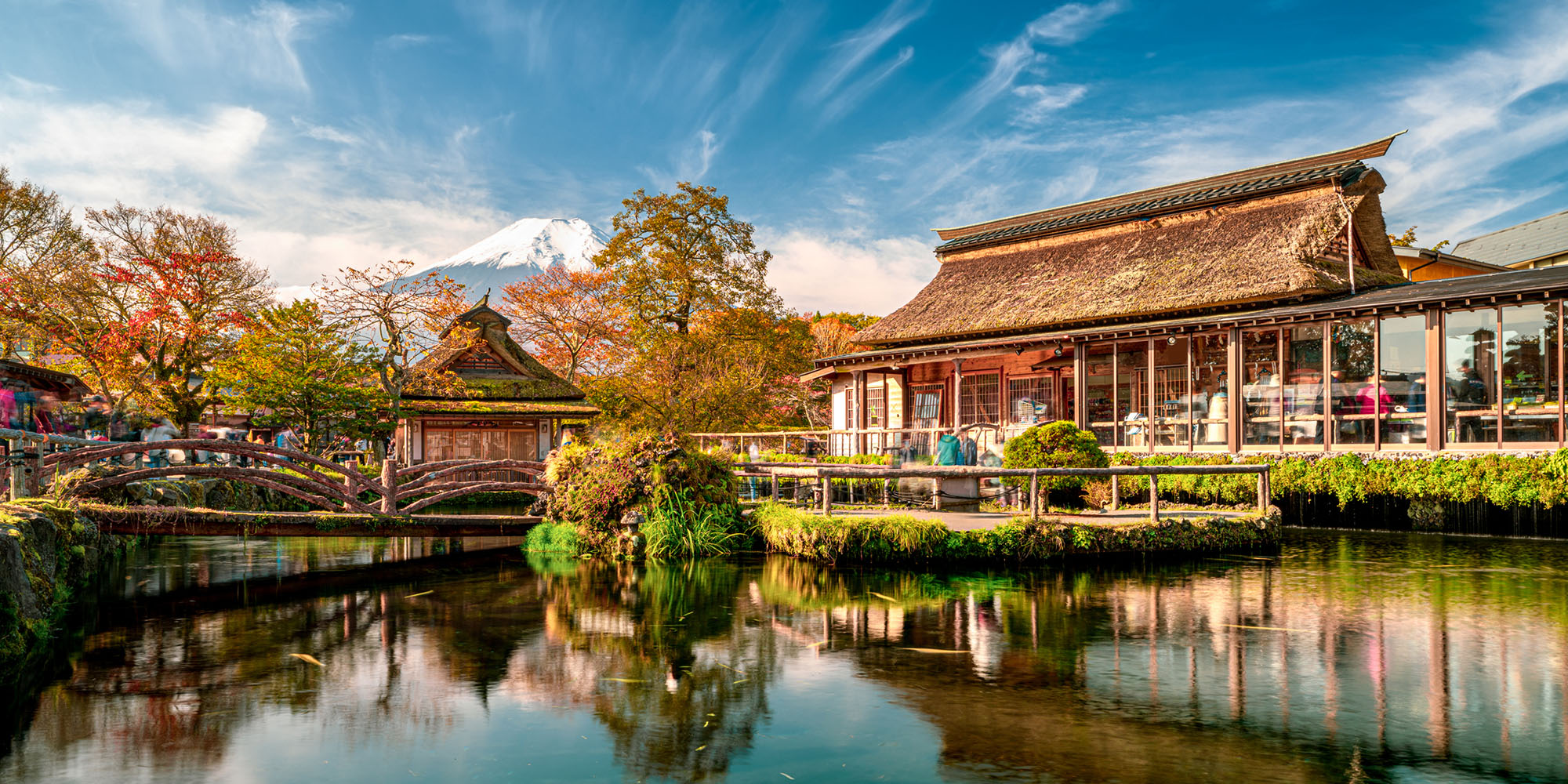
Eight crystal-clear ponds fed by Fuji’s snowmelt, ringed by thatched-roof houses. The spring water stays cold all summer — the village feels several degrees cooler than the lakeshore.
3:30 PM – Lake Kawaguchi North Shore
A final photo stop on the quieter northern shore — on clear afternoons the summit sometimes reappears for a farewell view across the water.
4:30 PM – Return Drive to Tokyo
Back at your hotel around 6:00–6:30 PM, ahead of the evening rush.
August Visibility & What to Bring
- Visibility: the lowest of the year at midday — but early mornings are regularly clear. Start early, always.
- Clothing: full summer wear at the lakes; bring one light layer for the 5th Station.
- Heat: hydrate and use sun protection — UV at altitude is intense.
- Crowds: Obon week (mid-August) is the busiest of the year. Weekdays outside Obon are noticeably calmer — a private car lets you skip bus queues entirely.
See Mt. Fuji in August — Beat the Haze and the Crowds
In August, the travelers who see the summit are the ones who arrive first. A private chauffeur-driven tour from Tokyo gives you the 7 AM head start, cool comfort between stops, and a flexible route around fireworks, festivals, and your own pace. Door-to-door, up to 9 passengers, all tolls included.
→ Read about our Private Mt. Fuji Day Tour from Tokyo
→ Check prices & book your Mt. Fuji tour